2026-09-23 ·
How to Spot Termite Activity Around Brooksville Homes
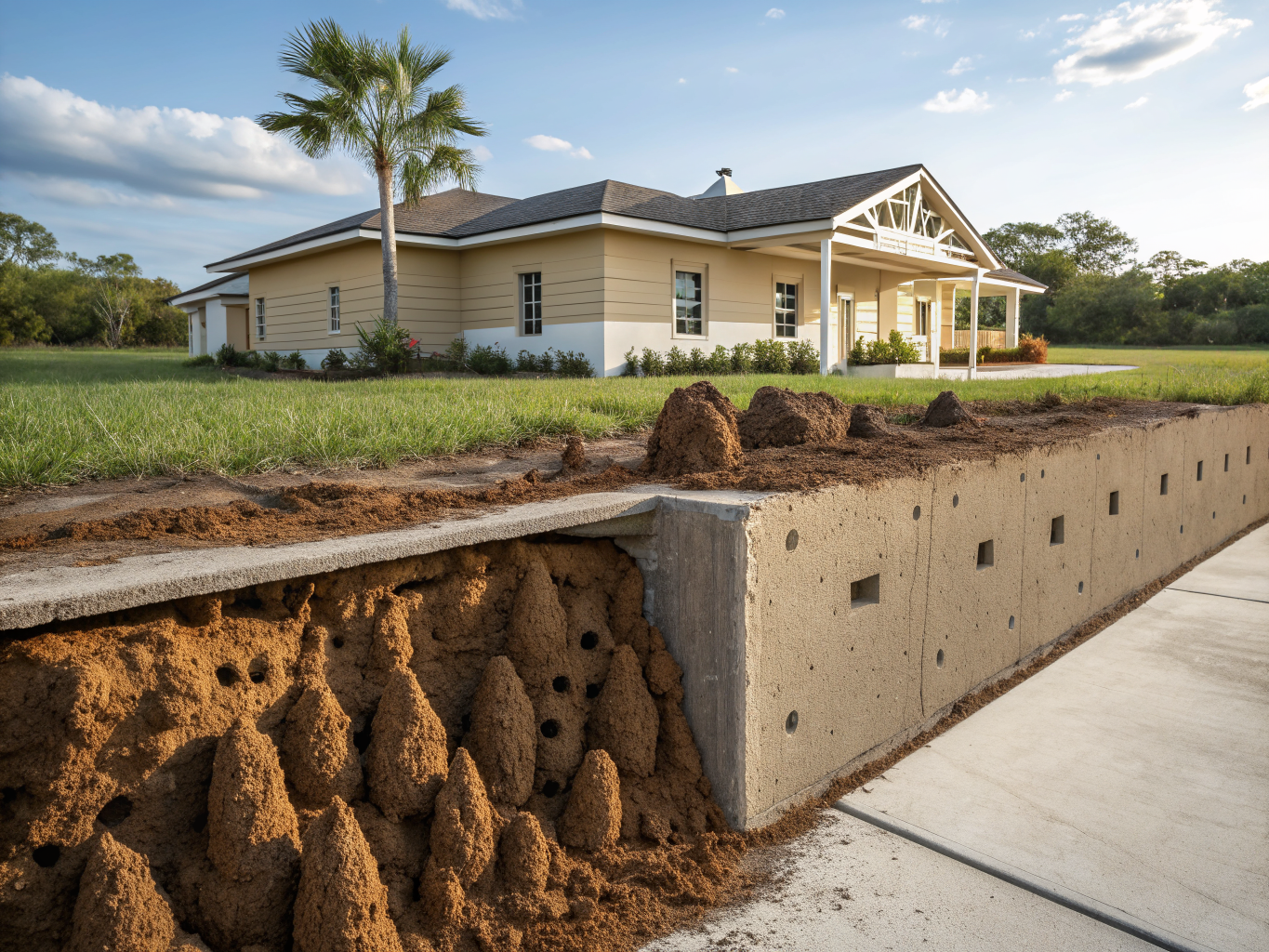
Look for mud tubes along foundations, piles of frass near baseboards, and hollow wood when tapped in Brooksville homes. These indicators appear most often in older structures common across Hernando County where moisture from hot humid summers supports colony growth. Mild winters allow termites to remain active year-round rather than entering full dormancy.
Visual Signs of Termite Damage
Homeowners in Brooksville often notice buckling floorboards or blistered paint on baseboards first because subterranean termites consume wood from the inside out. In neighborhoods such as North Brooksville and Brooksville Hills, many homes built before widespread soil treatments show these symptoms along sill plates where soil meets wood. Tap suspect areas with a screwdriver; a dull thud instead of solid resistance signals hidden galleries. Frass resembling fine sawdust collects in small heaps beneath exit holes, a clear marker that differs from carpenter ant debris which includes insect parts. Checking window sills after mild winter days reveals discarded wings from swarmers that have shed them to start new colonies. These physical clues appear consistently in the area’s mix of frame and masonry homes because the humid subtropical climate keeps soil moisture levels high enough for termite survival even in drier months.
Mud Tubes and Frass Indicators
Subterranean termites build shelter tubes from soil particles and saliva along foundation walls and piers to maintain humidity for their colonies. In South Brooksville properties near Rogers Park, these tubes often run vertically from ground level up to wooden porch supports or siding. Break a tube gently; if workers repair it within days, activity is current rather than old. Frass from drywood termites appears as six-sided pellets that feel gritty between fingers, while subterranean species produce irregular sawdust-like material. Homeowners should examine crawl spaces monthly because the region’s hot humid summers accelerate tube construction once temperatures rise above 70 degrees. Areas around the Hernando County Courthouse and Brooksville Train Depot contain older buildings where repeated moisture exposure from summer storms creates ideal entry points at expansion joints. Documenting tube locations with photos helps track whether colonies are expanding toward living spaces.
Seasonal Patterns in Hernando County
Termite swarmers emerge most frequently in Brooksville during late spring and early summer when humidity spikes after afternoon rains. Mild winters keep soil temperatures above the threshold that halts foraging, so colonies continue feeding through February unlike colder northern regions. In nearby Spring Hill and New Port Richey, similar patterns occur but Brooksville’s slightly inland location means slightly lower average moisture that still supports activity around irrigated lawns. After heavy summer storms, saturated soil pushes termites upward into wall voids of homes in Downtown Brooksville. Checking attics and exterior trim during these periods catches early mud tubes before they reach living areas. The consistent warmth also shortens the time between egg laying and worker maturity, allowing colonies to grow faster than in drier counties to the north. Commercial office buildings and retail spaces in the courthouse district also benefit from scheduled Commercial Pest Management to prevent structural termite liabilities.
Checking Specific Home Areas
Start inspections at the foundation perimeter where soil contacts wood, then move to window frames, door thresholds, and deck posts common on properties in Brooksville Hills. In South Brooksville, many homes have pier-and-beam construction that creates hidden voids termites exploit. Use a bright flashlight to scan for pencil-thin tubes behind insulation or along plumbing penetrations. Inside, listen for a faint rustling sound when pressing an ear to walls near baseboards during quiet evenings. Pay extra attention to bathrooms and kitchens where plumbing leaks add the moisture termites require. Properties near the Hernando Heritage Museum often sit on older lots with mature trees whose roots can carry colonies closer to structures. Regular checks every 90 days during the humid season catch activity before structural weakening occurs.
When to Arrange a Professional Inspection
If mud tubes reappear after removal or frass accumulates repeatedly, contact our Florida FDACS Certified team for dedicated Termite Control & Inspections located at 1000 Hale Ave, Brooksville, FL 34601 for a thorough evaluation. Technicians use moisture meters and listening devices to locate colonies that visual checks miss in older housing stock. Linking this step with guidance in Preventing Ant Entry After Summer Storms in Brooksville helps residents address multiple pests that thrive in the same damp conditions. Early detection prevents the need for extensive wood replacement that can develop when colonies remain untreated through multiple humid seasons. For immediate inspection, call (352) 645-0373 today.