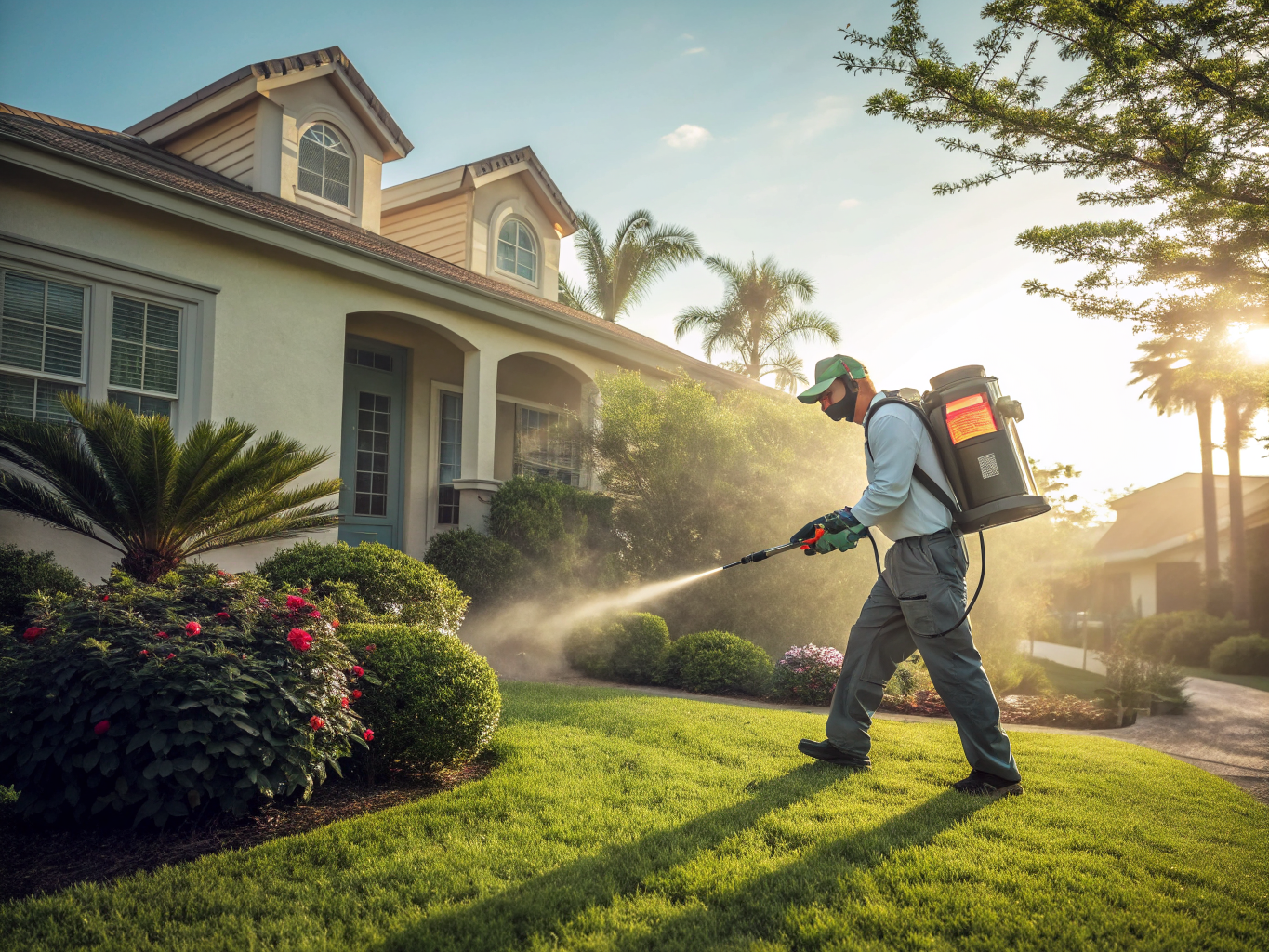
Brooksville's hot humid summers and mild winters keep many outdoor pests active year-round, especially in older neighborhoods like South Brooksville and North Brooksville where mature trees and irrigation create steady moisture. Homes near the Hernando County Courthouse or Brooksville Train Depot often sit on established lots with compacted soil that holds water longer, encouraging fire ants and mosquitoes. Treatments must account for these conditions rather than relying on generic schedules used in drier parts of the state.
Properties in Brooksville Hills and along routes toward New Port Richey frequently border drainage ditches and low-lying yards that collect runoff during summer storms, creating breeding sites for mosquitoes and harborage for rodents. Technicians apply targeted baits and growth regulators around lawn edges and foundation perimeters instead of broad sprays that can wash away quickly in Florida rains. This approach limits impact on pollinators while addressing the actual pressure points created by local terrain and water movement.
Mild winters mean egg cases and colonies survive in leaf litter and mulch beds common around Rogers Park and the Hernando Heritage Museum area. Follow-up visits focus on these micro-habitats rather than treating the entire yard each time. Materials are chosen for residual effect through humidity without leaving residues that break down too fast in the county's sandy soils.
[▶ Watch Video Overview: Lawn & Outdoor Pest Control in Brooksville, FL](https://www.youtube.com/watch?v=0UoTHFsTnoU)
Technician insight
In Brooksville the thing that catches most people out with lawn and outdoor pest control is how mild winters let fire ant colonies and mosquito larvae keep going in drainage low spots around older homes in North Brooksville and near Rogers Park; skipping source reduction and only spraying the grass leaves the real problem untouched.
Fire Ant Pressure on Established Lot
A homeowner in South Brooksville noticed expanding mounds near the back fence after summer rains. Inspection found multiple colonies tied to irrigation overspray and leaf litter against the foundation. Bait applications plus removal of the debris stopped new mound formation within ten days.
Lawn & Outdoor Pest Control Services We Offer
✓Mosquito Control
Reduces breeding around standing water and vegetation in yards throughout Downtown Brooksville and South Brooksville where summer humidity drives high populations.
✓Fire Ant Treatment
Targets mound colonies in lawns and beds common on older lots in North Brooksville and Brooksville Hills using baits that work through the colony in humid conditions.
✓Tick and Flea Yard Treatment
Treats tall grass edges and shaded areas near fences that harbor ticks in properties bordering wooded sections toward Spring Hill.
✓Grub and Lawn Insect Control
Addresses root-feeding grubs that weaken turf in irrigated yards across Hernando County where mild winters allow extended feeding periods.
✓Outdoor Rodent Exclusion
Secures foundation gaps and removes harborage around sheds and woodpiles typical of homes near the Brooksville Train Depot.
Lawn & Outdoor Pest Control Cost in Brooksville, FL
| Service | Typical Range | What Affects It |
|---|---|---|
| One-Time Mosquito and Ant Treatment | $175–$325 | Higher for larger lots or heavy fire ant pressure in South Brooksville |
| Quarterly Lawn and Outdoor Program | $450–$750 | Covers four visits; price moves with property size and irrigation use |
| Grub Control Application | $150–$275 | Depends on turf area and whether aeration is needed first |
| Tick and Flea Perimeter Treatment | $125–$225 | Lower for small yards, higher near wooded edges toward New Port Richey |
Ranges are typical for Brooksville, FL and confirmed with a clear quote after inspection before any work starts.
How it works
- 1
Property Inspection
Walk the full yard noting moisture pockets, ant mounds, and vegetation touching structures in neighborhoods like South Brooksville.
- 2
Targeted Application
Apply baits, growth regulators, and perimeter treatments matched to the specific pests and soil conditions found on site.
- 3
Source Reduction Guidance
Identify and advise on standing water or debris that supports breeding, focusing on local drainage patterns.
- 4
Follow-Up Visit
Return after 7-14 days to check results and adjust for any colonies that survived the initial treatment in humid weather.
Pricing
Pricing varies by yard size, pest pressure, and whether quarterly maintenance is chosen.